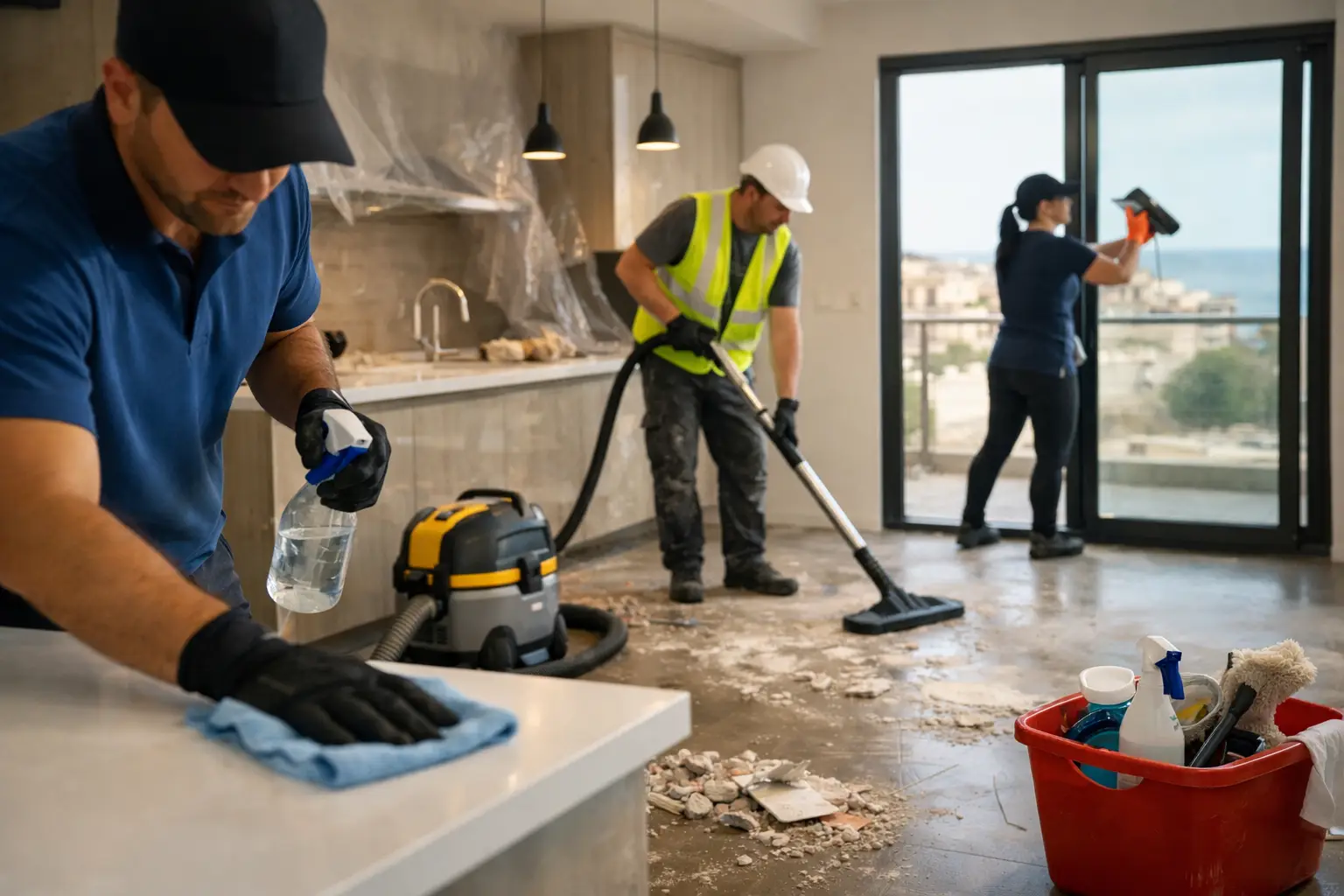
A completed renovation can look finished while still being unready to live in, let or hand over. Fine construction dust settles inside drawers, across window tracks, on light fittings and behind appliances long after the contractors have left. Post-construction cleaning in Malta is the detailed final stage that turns a building site or refurbished room into a clean, presentable property.
For homeowners, landlords, Airbnb hosts and property managers, the work is not simply about making surfaces look better. It is about removing residue safely, checking the condition of finishes, and preparing the space for furniture, photography, guests or tenants. The scope depends on the project, the materials used and whether the property has been occupied during works.
What Post Construction Cleaning in Malta Includes
Post-construction cleaning is different from a routine domestic clean. The team works through the property systematically, starting with dry dust removal and progressing to detailed cleaning of the surfaces that require it. This order matters. Wiping too early or using too much water on dusty areas can spread residue into joints, tracks and unfinished surfaces.
Typical work includes removal of building dust from floors, skirting boards, doors, cupboards, switches, sockets and ledges. Windows, frames and rails need particular attention, as plaster dust and debris often collect in the channels. Kitchens and bathrooms are cleaned inside and out, including cabinets, tiles, sanitaryware, taps and accessible pipework.
Floor cleaning depends on the material. Tiles may need residue removal and a thorough wash, while timber, laminate, natural stone and newly installed finishes need a more controlled approach. Strong chemicals or abrasive pads can damage a surface that has only just been fitted. A professional cleaner should assess the finish before choosing products and methods.
The service can also cover internal glass, mirrors, appliance exteriors, light fittings, radiators, built-in storage and balcony areas where dust has travelled from the works. If paint splashes, silicone marks, grout haze or adhesive residue are present, these should be identified during the quote stage. Removal is often possible, but the process depends on the surface beneath and how long the residue has been left in place.
Why Construction Dust Needs More Than a Quick Clean
The dust left after drilling, sanding, cutting and plastering is finer than ordinary household dust. It can settle again after an initial clean, especially where windows were left open or ventilation systems have been running during the project. A property may therefore need a staged clean: one detailed clean after major works, followed by a final touch-up once contractors have completed small fixes and removed their tools.
In Malta, open windows and balconies can make this more noticeable. Dust can move between internal and external areas, while works in nearby properties may add further debris. For short-let properties, this creates a practical risk: a flat can appear ready at inspection but still leave dust on guests' luggage, towels or clothing after they settle in.
Construction residue can also affect presentation in less obvious places. Cupboard interiors, wardrobe rails, extractor filters, air-conditioning vents and window seals are often missed when cleaning is rushed. These are the areas tenants and guests notice when unpacking or using the property for the first time.
The Right Time to Schedule the Clean
The best time for a full post-construction clean is when all dusty work has stopped. That includes drilling, sanding, cutting tiles, plaster repairs and final joinery adjustments. Ideally, builders should remove major waste, unused materials and large rubble before cleaning begins. Cleaning teams can remove normal post-work debris, but a property full of packaging, timber offcuts and heavy waste needs clearance first.
It is sensible to schedule the clean after final installations are in place but before soft furnishings, linen and personal belongings are moved in. Empty rooms give cleaners access to edges, corners and floor areas that would otherwise be covered. If furniture is already present, the work can still be completed, although access and timing may change.
For landlords and hosts, allow time between the clean and the first booking or handover. A final inspection is useful, particularly after a substantial refurbishment. It gives you time to report any snagging, arrange painting touch-ups or request maintenance work without affecting a guest arrival or tenancy start date.
What to Prepare Before the Cleaning Team Arrives
Clear communication avoids delays and helps the team quote accurately. Share the property size, number of bathrooms, current stage of the project and whether the property is empty. Photos are useful where there is visible residue, heavy dust build-up, paint marks or newly fitted materials that need careful treatment.
Before the appointment, contractors should remove tools, ladders, heavy materials and waste that may prevent safe access. Water and electricity should be available, and any building access arrangements should be confirmed in advance. In blocks of flats or managed developments, check lift use, parking access and any rules around working hours.
If there are sensitive surfaces, point them out. This can include untreated stone, specialist worktops, polished metal, timber flooring, newly painted walls or delicate glass. Fresh paint, sealant and grout may need curing time before cleaning. Trying to remove marks too soon can create damage that is more difficult and expensive to correct than the original residue.
A Practical Handover Checklist
Before accepting the property as ready, walk through each room in natural light where possible. Look beyond the main floor and worktop surfaces. Check:
- window tracks, frames and glass for dust, stickers and residue;
- cupboard, drawer and wardrobe interiors;
- bathroom corners, tile edges, taps and shower screens;
- switches, sockets, door handles and skirting boards;
- floors at the edges of rooms and beneath fitted units;
- balconies, entrance areas and any external glazing affected by works.
This inspection is not about expecting a new property to be flawless. It is about separating cleaning requirements from snagging issues. A scratch in a worktop, a chipped tile, poor silicone application or incomplete paintwork should be returned to the relevant contractor rather than treated as a cleaning issue.
When a One-Off Clean Is Not Enough
Some projects require more than one visit. Large renovations, properties with ongoing snagging, or homes where contractors are still entering and leaving may benefit from an initial builders' clean followed by a final presentation clean. This is often the more efficient option because the detailed finishing work is done when the environment is stable.
A final presentation clean is particularly useful for Airbnb and short-let properties. Once the dust and residue have been removed, linen can be arranged, bathrooms can be stocked, and the property can be checked against the same standards used for guest turnover. This avoids coordinating separate providers at a busy point in the project.
The same applies where painting, minor repairs or upholstery cleaning are still needed. Using a single property-services partner can reduce scheduling gaps and make it easier to manage the final sequence of work. Cleaning Services JV can coordinate cleaning and related property-care requests through a clear quote and booking process, helping owners move from project completion to property readiness with fewer moving parts.
Choosing a Service That Protects the Finish
The lowest quote is not always the best choice for a newly completed space. Post-construction cleaning involves unfamiliar surfaces, residual materials and access challenges that do not exist in a standard clean. Ask what is included, whether glass and internal cupboards are covered, how residue will be assessed, and whether a follow-up visit is available if dust settles again.
Good planning is usually more valuable than rushing the final clean. When the contractors are finished, waste is cleared and access is organised, the cleaning team can focus on the details that make the property feel complete. Book the work with enough time for inspection, touch-ups and final preparation, and the handover will feel controlled rather than last-minute.