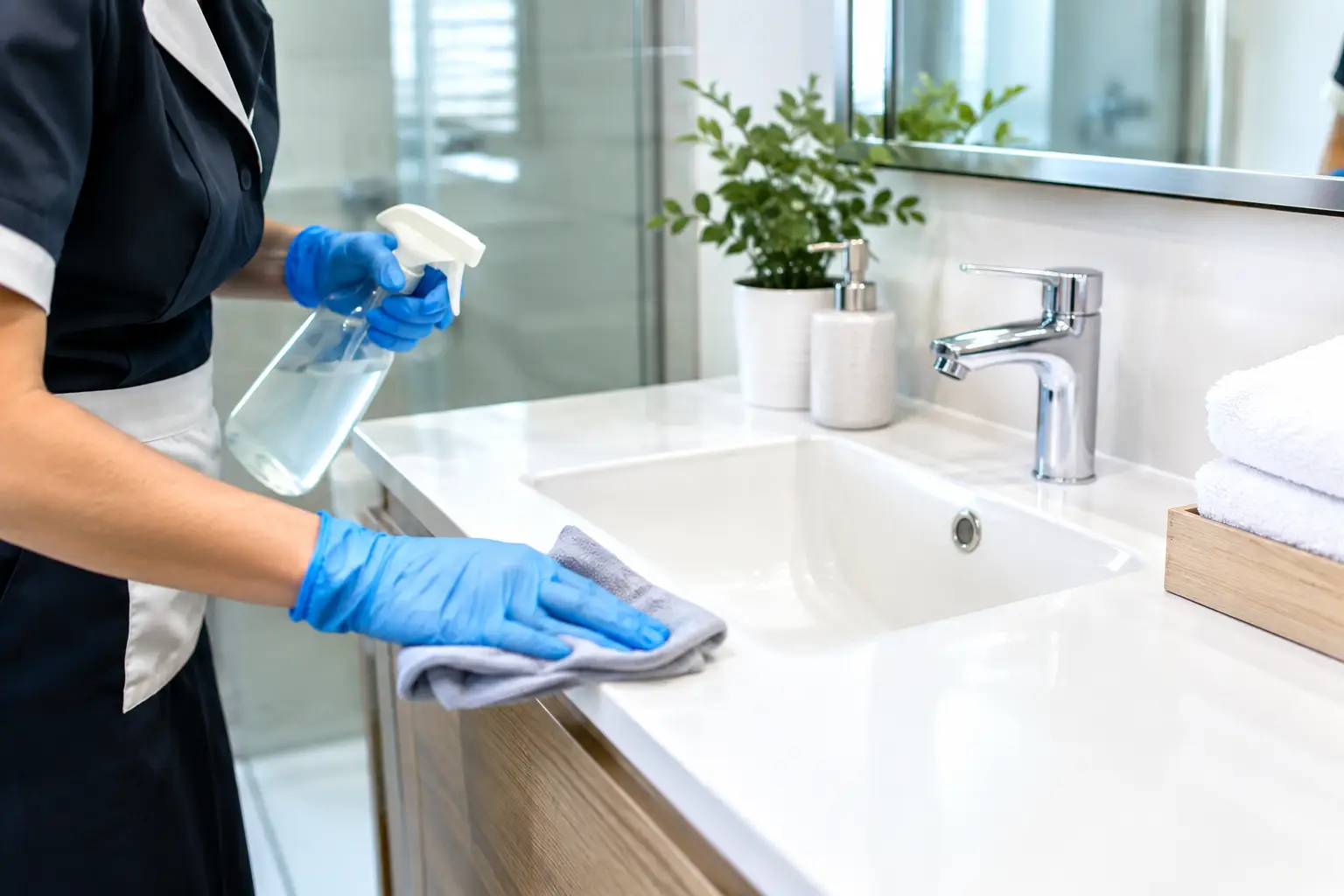
A guest may forgive a small delay at check-in. They are far less likely to overlook a bathroom that feels used, smells damp, or has water marks around the taps. To sanitise guest bathrooms properly, the work needs to be more than a quick wipe of visible surfaces. It needs a repeatable turnover process that removes residue, treats high-touch points, checks presentation, and leaves the room ready for the next arrival.
For Airbnb hosts, short-let operators and property managers, the bathroom is one of the fastest places for standards to slip between bookings. It is also one of the first spaces guests inspect. A consistent process protects reviews, reduces complaints, and helps every cleaner work to the same standard.
Start with cleaning, then sanitising
Sanitising products work best on a surface that is already clean. Soap scum, limescale, hair, body oils and cosmetic residue can prevent a sanitiser or disinfectant from making proper contact with the surface beneath. Spraying a product over a dirty basin may make it smell fresh, but it does not complete the job.
Begin by removing used towels, empty toiletries, rubbish and any forgotten guest items. Open a window where possible or switch on the extractor fan before using cleaning chemicals. Then clean the toilet, shower, basin, taps, mirrors and floor with suitable products for each material.
Only once visible dirt and residue have been removed should you apply your sanitising product to high-touch surfaces. Follow the label instructions, especially the required contact time. Wiping it away immediately is a common turnover mistake. The surface must remain wet for the stated period before it is wiped or allowed to air dry.
Do not mix cleaning chemicals. In particular, bleach should never be mixed with acidic limescale removers, toilet cleaners or ammonia-based products. Use one product at a time, rinse where required, and keep the bathroom ventilated.
A practical guest bathroom turnover sequence
A fixed order saves time and prevents cross-contamination. Work from cleaner areas towards dirtier areas, and from higher surfaces down to the floor. Use separate cloths or colour-coded materials for toilets and general bathroom surfaces.
Clear and inspect the room
Before cleaning, look at the bathroom as a guest would. Check behind the door, inside drawers and cabinets, around the toilet base, and in the shower tray. Remove stray hairs from the basin, shower walls and plugholes before wet cleaning begins.
Look for problems that cleaning alone will not solve: a dripping tap, loose toilet seat, slow-draining shower, cracked sealant, faulty extractor fan or mould around silicone edges. Flagging these issues during a turnover prevents a minor maintenance task becoming a guest complaint or water-damage issue.
Treat the toilet thoroughly
Apply toilet cleaner inside the bowl and allow it to work while you clean other areas. Clean the flush button or handle, seat top and underside, lid, hinges, rim exterior, cistern and surrounding wall or floor splash zone. These are all high-touch or high-risk areas.
Use a dedicated toilet cloth and equipment only for this task. Once sanitised, leave the toilet seat and lid in a neat, closed position unless the property’s presentation standard specifies otherwise. Make sure the brush holder is clean and dry externally, not carrying old water or residue.
Clean the basin, taps and mirrors
The basin should be free from toothpaste marks, hair and soap residue, including around the overflow and plug. Pay particular attention to tap handles, mixer controls and the soap dispenser pump. Guests touch these points immediately after entering the room.
Dry buffing is worth the extra minute. A clean tap covered in water spots can still look neglected, particularly in Malta where hard water can leave visible limescale quickly. Use the correct descaling product for the fixture finish and avoid abrasive pads on chrome, black fittings or delicate stone surfaces.
Polish the mirror last, using a clean dry cloth so it is free from streaks. Check it from the doorway as overhead lighting can reveal marks that are not obvious when standing close.
Reset the shower or bath
Clean the shower controls, shower head, hose, screen handles, shelves, drain cover and any grab rails. Remove hair from the drain and check that water runs away freely. A clean shower tray with a blocked drain is still a poor guest experience.
Shower screens and glass panels should be cleaned and dried to reduce water marks. If a property has recurring limescale, build descaling into the deep-clean schedule rather than trying to solve heavy build-up during every same-day turnover. This protects the finish and keeps routine cleaning realistic.
Wash or replace the shower mat according to the property’s linen process. Do not leave a damp mat folded over the bath or tray, as it can create odour and make the room appear unprepared.
Sanitise the surfaces guests actually touch
Once the main cleaning is complete, sanitise the areas most likely to be handled. This includes door handles, lock turns, light switches, extractor fan pulls, toilet flush controls, tap handles, shower controls, cabinet handles, soap dispensers and hairdryer switches where provided.
Remote controls, thermostats and smart-home panels located near the bathroom should be included in the wider turnover checklist. Use a product that is safe for electronics and avoid saturating switches or controls.
The right product depends on the surface and the property’s requirements. A general bathroom sanitiser may be appropriate for routine high-touch cleaning, while a disinfectant may be required where there has been illness or a specific hygiene concern. Stronger products are not automatically better. They can damage finishes, create excessive fumes, or leave residue if used incorrectly.
Finish with presentation and restocking
A sanitised bathroom should also look deliberately prepared. Replace hand towels, bath towels and toilet rolls according to the occupancy and property standard. Fold towels consistently, ensure they are dry and fresh-smelling, and remove any item with stains, make-up marks or loose threads.
Check the hand soap, shampoo, shower gel, bin liner and spare toilet roll. Refill dispensers only after cleaning their pumps and exterior. If individual toiletries are supplied, keep packaging clean and arranged neatly rather than overstocking every surface.
The final floor clean comes after all other work. Vacuum or remove loose debris first, then mop from the far end of the room towards the exit. Allow enough drying time before placing mats back down. A wet floor at check-in is both a presentation problem and a slip risk.
Before leaving, perform a 30-second final check. Stand at the doorway and look for streaks, hair, overflowing supplies, odours, marks around the toilet, or anything left behind. Then test the flush, tap flow, drainage and main light. This small inspection often separates a basic clean from a reliable turnover.
When a standard clean is not enough
Routine sanitising keeps guest bathrooms safe and presentable, but some conditions call for a deeper intervention. Persistent mould, stained grout, heavy limescale, unpleasant drain odours, construction dust or long-term vacant-property residue cannot always be resolved within a normal changeover slot.
For these cases, schedule a deep clean or maintenance visit rather than asking a turnover cleaner to rush through a specialist problem. A slow drain may need plumbing attention. Failing sealant may require replacement. Recurrent mould may point to poor ventilation rather than poor cleaning.
For managed properties, documenting these findings is useful. A simple record of recurring issues, products used and maintenance actions helps property owners plan work between bookings instead of reacting after a negative review.
Keep the process consistent across every property
The most effective bathroom standard is one that can be followed under time pressure. Create a property-specific checklist that covers fixture types, approved products, linen quantities, amenity levels and known maintenance concerns. A compact bathroom, a luxury ensuite and a family holiday flat will not all need the same approach.
For hosts managing several turnovers, professional support can make that consistency easier to maintain. Cleaning Services JV can coordinate Airbnb housekeeping, linen requests, deep cleaning and maintenance tasks so bathroom standards are not dependent on last-minute arrangements.
A guest bathroom does not need elaborate styling to make the right impression. It needs to be visibly clean, properly sanitised, dry, stocked and fully functional. Make that result part of every turnover, and guests will notice the care before they have unpacked.
#cleaning #clean #cleaninghacks #cleaningtips #cleanhouse #cleaningroutine #deepcleaning #cleanhome #cleaningservice #cleaningservices #residentialcleaning #professionalcleaners #housecleaning #cleaningservicejv #beforeandafter #deepclean #cleaningtransformation #carpetcleaning #upholsterycleaning #steamcleaning #ecocleaning #greencleaning #naturalcleaning #nontoxiccleaning