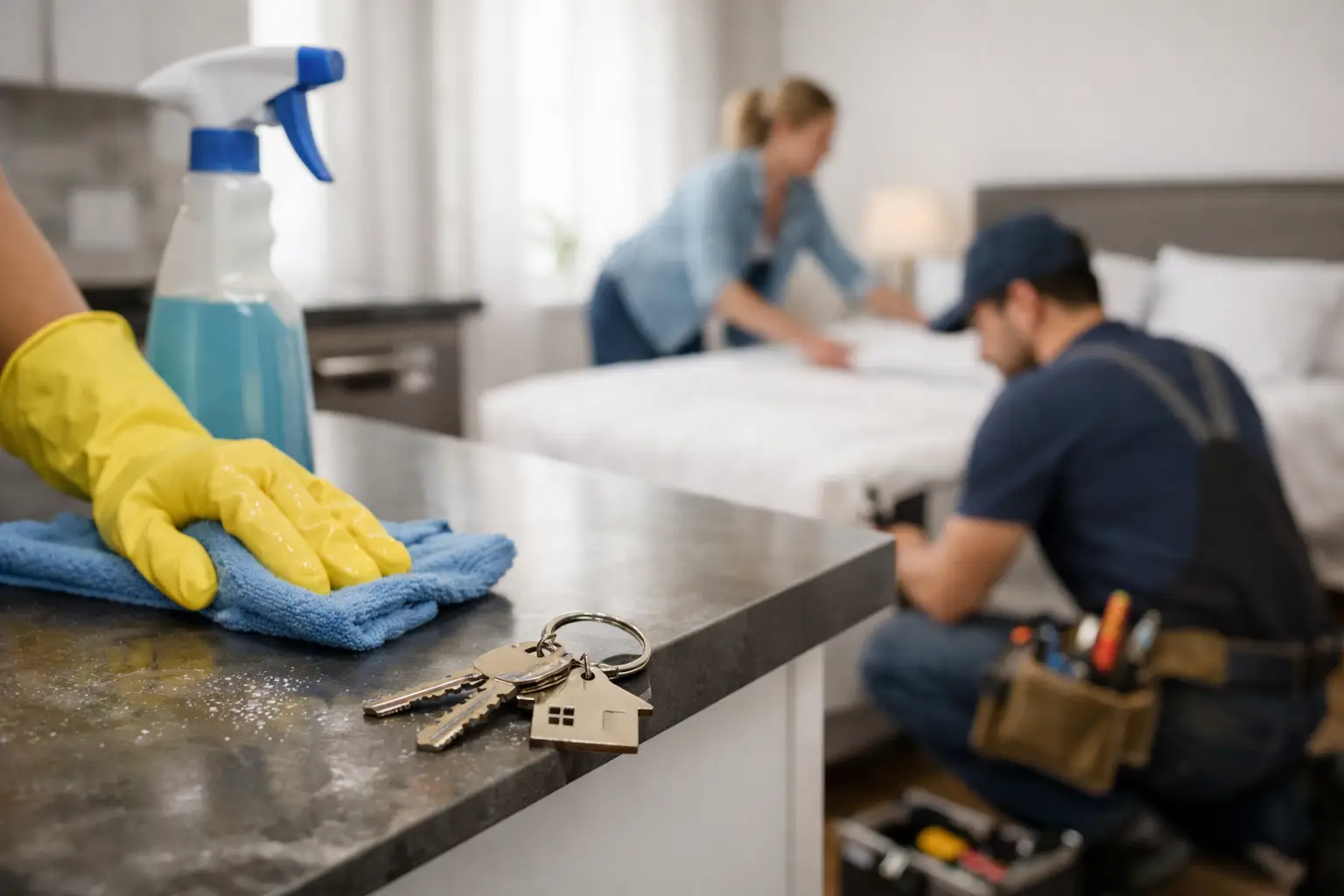
A guest checks out at 10am and the next arrival is due at 3pm. In that five-hour window, a rental must be cleaned, reset, inspected and ready to make a strong first impression. Knowing how to prepare rental turnovers is not simply about working faster. It is about running a reliable process that prevents missed cleaning, missing linen, damaged items and last-minute maintenance calls.
For Airbnb hosts, short-let operators and property managers, a consistent turnover routine protects reviews and reduces unnecessary pressure on every changeover day. The best approach is to prepare the property before checkout, work through each room in a fixed order, and leave enough time for a final inspection.
How to prepare rental turnovers before guests leave
A successful turnover starts before the outgoing guests have left. Check your booking calendar at least a few days ahead and confirm the checkout and check-in times, the number of arriving guests and any special requests. A two-person booking and a family booking do not need the same bed configuration, towel quantity or consumables.
Confirm who is handling the cleaning, laundry and property access. If a key safe, smart lock or building entry code is used, make sure it is working before the turnover begins. Access problems can waste a large part of a short cleaning window.
It also helps to keep a simple property file for every unit. This should record the correct linen set-up, Wi-Fi details, appliance instructions, inventory expectations and known maintenance issues. For properties with several flats, this avoids relying on memory or passing unclear instructions between cleaners and managers.
Build a turnover checklist that follows the guest journey
Guests judge a rental in the order they experience it. They enter through the front door, notice the smell and floors, use the bathroom, inspect the bed and kitchen, then settle in. Your turnover checklist should follow that journey while ensuring that hygiene-critical areas are never rushed.
Start by airing the property and collecting rubbish, used linen and towels. Open windows where suitable and safe, switch on lights, and look for obvious damage before moving items around. Photograph anything that needs to be reported, including stains, breakages or missing inventory. This creates a clear record before the next guest arrives.
The cleaning work should then cover the whole property, not only the areas that look used. A practical room-by-room sequence includes:
- Bathrooms: disinfect toilets, showers, taps, sinks, mirrors and touchpoints; remove hair; replace towels and replenish toilet paper and soap.
- Bedrooms: strip beds fully, inspect mattresses and protectors, remake beds to the agreed standard, dust surfaces and check wardrobes, drawers and bedside lights.
- Kitchen: wash and put away crockery, clean appliances and worktops, empty the fridge of leftover food, check the bin and replenish essential supplies.
- Living areas: dust, vacuum upholstery where needed, clean tables, remove marks from switches and handles, and check remote controls and lamps.
- Entrance and outdoor spaces: sweep balconies or patios, clear ashtrays, wipe outdoor furniture and make sure the approach to the property looks cared for.
Work from cleaner areas towards dirtier areas and from high surfaces down to the floor. This prevents having to repeat work after dust or debris falls onto a finished surface. Bathrooms and kitchens need particular attention because even small oversights are highly visible in guest feedback.
Treat linen as an operational task, not an afterthought
Fresh, correctly presented linen is one of the clearest signs that a rental is ready. It is also one of the most common causes of turnover disruption when there is not enough stock, laundry is delayed or a set is returned with stains.
Keep enough linen for at least two complete changes per bed, with additional stock for busy periods or larger properties. The correct quantity depends on your booking pattern and laundry turnaround time. A property with same-day departures and arrivals may need three sets per bed to avoid delays, especially during Malta's high season.
Inspect sheets, pillowcases and towels before they are placed in the property. Linen should be stain-free, dry, fresh-smelling and folded or made up consistently. Do not hide a marked towel or sheet in the hope that a guest will not notice. Replacing it costs less than dealing with a complaint or a poor review.
Record linen quantities when stock is sent for washing and when it returns. This is particularly useful when managing several units or coordinating external laundry. It provides accountability and makes it easier to spot shortages early.
Check presentation as carefully as cleanliness
A property can be technically clean but still feel unprepared. Presentation covers the details that assure guests the home has been checked specifically for them: aligned cushions, straight curtains, empty bins, working lights, clean glass and a tidy welcome area.
Walk through the rental from the perspective of a first-time guest. Stand at the entrance and look for scuffed walls, clutter, stale odours, fingerprints and anything out of place. Then test the essentials. Turn on lights, check the air conditioning or heating where available, flush toilets, run taps, test Wi-Fi, inspect the television remote and confirm that required keys are present.
This final walk-through is also the right time to check safety items. Smoke alarms, fire extinguishers, window locks and external lighting should be maintained according to the property’s requirements. If something cannot be resolved before check-in, communicate promptly and provide a practical alternative where possible. Silence creates more frustration than a clear update.
Plan for maintenance between stays
Turnovers often reveal maintenance issues that guests did not mention. A loose handle, leaking tap, damaged blind or chipped paint may not stop a check-in, but leaving it unresolved can allow a small issue to become more expensive and more visible.
Separate urgent repairs from planned work. Urgent faults affect safety, security, water, electricity, access or essential facilities. These should be escalated immediately. Cosmetic issues and minor repairs can be logged, photographed and scheduled for the next available window, provided they do not materially affect the guest experience.
Avoid trying to complete major repairs during a tight same-day turnover unless the work can be guaranteed without compromising cleaning or check-in. In some cases, it is better to move a repair to an empty night and protect the booking than create disruption for incoming guests.
For operators managing multiple services, Cleaning Services JV can coordinate Airbnb housekeeping, laundry and linen requests, deep cleaning, painting and general maintenance through clear booking and quote processes. Using one organised service partner can reduce the back-and-forth that often causes turnover tasks to be missed.
Allow time for deep cleaning and periodic checks
A standard turnover clean keeps a property guest-ready, but it cannot replace regular deep cleaning. Grout, oven interiors, extractor filters, upholstery, carpets, skirting boards, window tracks and behind-furniture areas gradually collect dirt that a quick changeover cannot properly address.
Schedule deeper work around lower occupancy periods or blocked calendar days. The frequency depends on guest volume, the property’s location, whether pets are allowed and the condition of furnishings. A high-turnover holiday rental may need more frequent upholstery or carpet cleaning than a property used mainly for longer stays.
It is also worth completing a fuller inventory check regularly. Count glasses, cutlery, hangers, remotes, keys and small appliances. Replacing a missing item before a guest asks is quicker and more professional than responding after check-in.
Keep communication clear on turnover day
The person cleaning, the person managing bookings and the person handling repairs need one shared update process. A simple completion message should confirm that the property is cleaned, linen is in place, consumables are stocked, maintenance items are logged and the final inspection is complete.
If a problem arises, report it with photographs, a short explanation and the proposed next step. Avoid vague messages such as “the flat is not ready”. State what is outstanding, whether it affects check-in, and when it will be resolved. Clear information lets the manager make a quick decision and communicate professionally with the guest if necessary.
A well-prepared turnover does more than create a clean room. It gives the next guest confidence from the moment they arrive, while giving the property owner a process they can rely on when bookings are back-to-back.
#cleaning #clean #cleaninghacks #cleanwithme #cleaningmotivation #cleaningtips #cleanhouse #cleaningroutine #cleaningcommunity #deepcleaning #cleanhome #cleaninggadgets #cleaningservice #cleaningservices #commercialcleaning #residentialcleaning #cleaningcompany #cleaningbusiness #officecleaning #professionalcleaners #cleaners #housecleaning #maidservice #cleaningservicejv #beforeandafter #cleaningasmr #satisfying #satisfyingcleans #transformation #deepclean #cleaningtransformation #dirtytoclean #carpetcleaning #upholsterycleaning #stainremoval #steamcleaning #windowcleaning #pressurewashing #powerwashing #ecocleaning #greencleaning #naturalcleaning #nontoxiccleaning