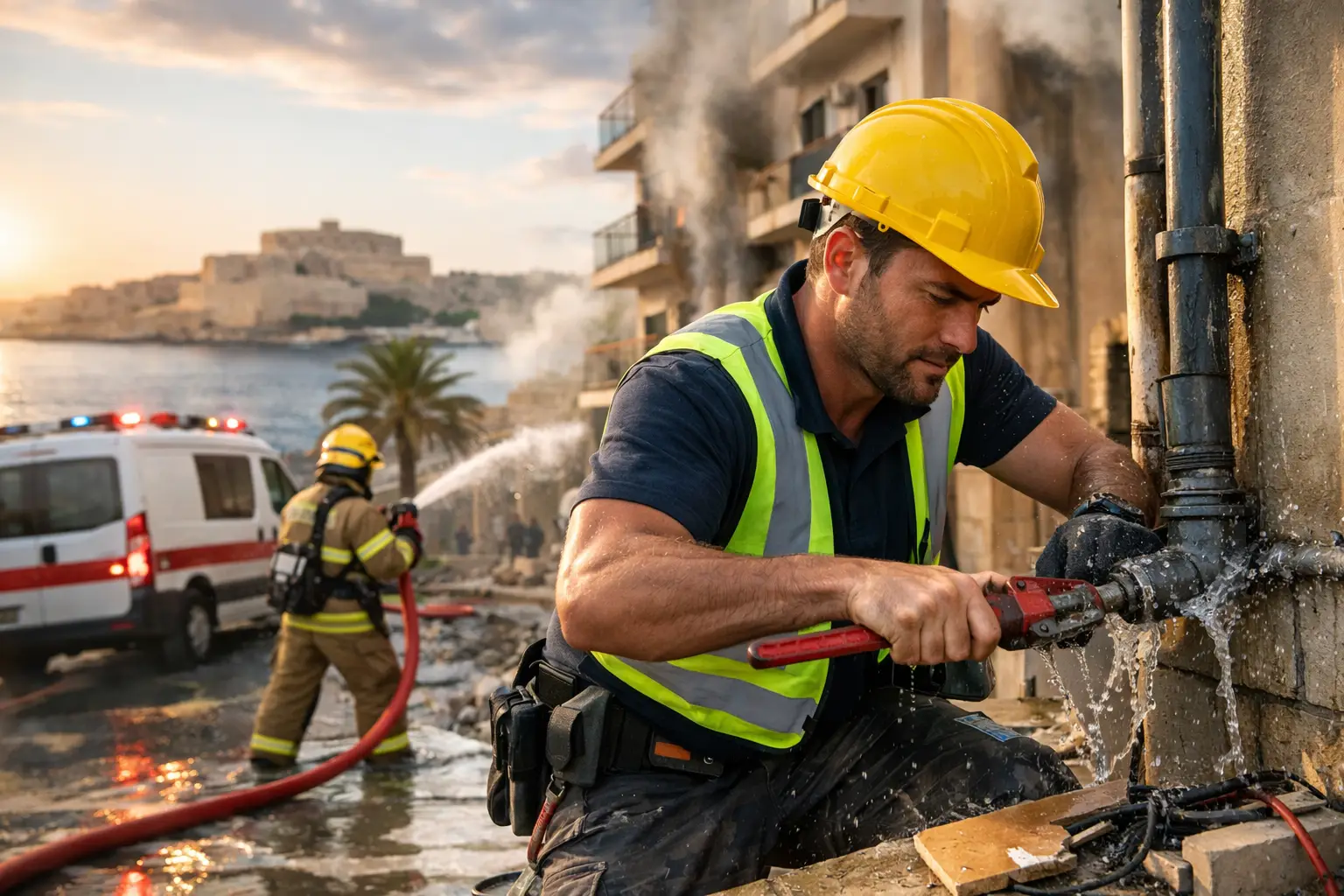
A leaking ceiling above a booked guest room, a failed water heater before a weekend arrival, or a sparking socket in a rental flat cannot wait for a convenient maintenance slot. Emergency property repairs Malta require quick decisions, clear information and practical action that protects people first, then limits damage to the property.
For homeowners, landlords and short-let operators, the immediate priority is not finding a perfect long-term solution at midnight. It is making the area safe, reducing further loss and arranging the right professional response. A calm, organised approach can prevent a small fault from becoming damaged flooring, mould, cancelled bookings or an unsafe property.
What counts as an emergency repair?
An emergency is a fault that creates an immediate safety risk, threatens significant damage, or makes a property unsuitable to occupy. A burst or active water leak, an electrical burning smell, exposed live wiring, a blocked drain causing wastewater to back up, broken external glass that leaves a home unsecured, and damage after severe weather all need prompt attention.
Some problems are urgent without being dangerous. A failed air-conditioning unit during a hot stay, a broken washing machine needed for linen turnaround, or a faulty lock at a short-let property can disrupt operations and require rapid coordination. The correct response depends on the impact. A loose cupboard hinge can be scheduled; a front door that will not lock should not be left until next week.
If there is fire, suspected gas danger, serious electrical risk, flooding that cannot be contained, or a threat to life, contact the emergency services first. Do not attempt a repair that puts you, a guest, tenant or cleaner at risk.
Emergency property repairs Malta: the first 30 minutes
The first half hour often determines the scale of the clean-up. Start by keeping people away from the affected area. If water is close to sockets, appliances or electrical fittings, do not touch them. Switch off electricity only if it is safe to reach the consumer unit without crossing water or entering a damaged area.
For a leak, turn off the local isolation valve where possible, or the main water supply if the source is unknown or flowing heavily. Move furniture, luggage, soft furnishings and electrical items away from the water path. Place towels or containers below a manageable drip, but do not rely on a bucket as a solution when water is spreading through ceilings, walls or floors.
For an electrical issue, stop using the affected circuit or appliance. Do not reset a breaker repeatedly, use extension leads as a workaround, or cover exposed connections. For broken glass or a damaged entrance, secure access from a safe distance and keep children, guests and pets clear of sharp debris.
Take clear photographs and short videos before cleaning up where it is safe to do so. Record the time the problem was found, the visible source, affected rooms and any immediate action taken. This helps a repair provider assess what is needed and gives owners or managers a useful record for insurance, guest communication or follow-up works.
Give the repair team useful information
A fast response is easier when the right details are available from the first call or quote request. State the property location, access arrangements, the nature of the fault, whether utilities have been isolated, and whether anyone remains in the property. For managed or short-let homes, include the next check-in, check-out or linen collection time.
Photos matter. A picture of a leaking valve, a water-stained ceiling, a broken lock or an electrical fitting can help determine whether a plumber, electrician, locksmith or general maintenance visit is required. It also avoids sending a team without the necessary materials.
Be direct about the condition of the site. If there is standing water, sewage, broken glass, smoke damage or restricted access, say so. Emergency work can involve a temporary repair, isolation, extraction, cleaning and a later permanent repair. Setting this out early prevents unrealistic expectations and makes scheduling more efficient.
Water damage needs repair and recovery
Stopping a leak is only the first part of the job. Water trapped under flooring, in plasterboard, behind kitchen units or in upholstery can create staining, odour and mould if it is not dried properly. This is particularly relevant in properties with frequent guest turnover, where a room may appear dry but still have damp materials beneath the surface.
Once the source is controlled, assess which surfaces can be dried and which need specialist attention or replacement. Lift wet items where appropriate, increase ventilation if weather conditions allow, and avoid placing damp rugs, bedding or cushions in a closed room. Do not repaint a stained wall before the moisture issue has been resolved. Fresh paint may hide the mark briefly, but it will not cure the underlying dampness.
A coordinated property service can be valuable here. The repair may need to be followed by water removal, deep cleaning, laundry or linen replacement, carpet and upholstery treatment, and touch-up painting once the affected area is dry. Managing these stages through one point of contact reduces the administrative work for property owners and helps return the space to a presentable condition sooner.
Protect guests, tenants and booking schedules
For Airbnb hosts and short-let managers, an emergency is also a communication task. Tell guests what has happened, what areas are affected and what practical arrangements are being made. Avoid promising a completion time before the repair team has assessed the problem. A clear update is more useful than an optimistic estimate that changes later.
If a bedroom, bathroom or kitchen cannot be used safely, consider whether the booking can continue with a reasonable alternative or whether relocation is necessary. This depends on the fault, the property layout and the length of stay. A minor repair in a separate utility area may be manageable; a water leak affecting the only bathroom is likely to be a different situation.
After the repair, inspect the property from a guest-ready perspective. Check for damp odours, water marks, dust, repair debris, loose materials and missing linen. A functional repair alone may not be enough before the next arrival. Cleaning Services JV can coordinate general maintenance with deep cleaning, Airbnb housekeeping, laundry and presentation checks, helping operators deal with both the fault and the condition left behind.
Avoid decisions that create a second problem
Emergency repairs are rarely the right time for improvised fixes. Tape over an active leak, makeshift wiring, covering dampness with furniture, or allowing a guest to use a questionable appliance can increase risk and cost. Temporary measures have a place, but they should be safe, clearly understood and followed by proper remedial work.
It also helps to distinguish between damage control and improvement work. A plumber may stop the leak immediately, while replacement tiles, repainting or cabinet repairs are scheduled after drying and assessment. This can feel slower than doing everything at once, but it avoids repairing finishes before the building materials beneath them are stable.
Keep records of labour, materials, photographs and communications. For landlords, this supports a clear maintenance history. For short-let operators, it helps explain decisions to owners and creates a more reliable plan for future incidents.
Prepare before the next fault
The most effective emergency plan is built before anything goes wrong. Keep water shut-off points and the electrical consumer unit accessible and labelled. Store basic information for each property: utility locations, appliance details, access codes, parking instructions, owner approval limits and current guest dates. A property manager should be able to provide these details without searching through old messages.
Routine maintenance also reduces avoidable call-outs. Check flexible hoses, seals, drains, door locks, extractor fans, smoke alarms, external fittings and signs of moisture between bookings or inspections. Small defects are easier to resolve when they are found during planned maintenance rather than after they disrupt a stay.
When an issue cannot wait, provide accurate details, protect the site and arrange qualified help without delay. A fast, organised response protects the property, reassures occupants and gives every follow-up service a better starting point.
#cleaning #clean #cleaninghacks #cleanwithme #cleaningmotivation #cleaningtips #cleanhouse #cleaningroutine #cleaningcommunity #deepcleaning #cleanhome #cleaningservice #cleaningservices #residentialcleaning #cleaningcompany #professionalcleaners #housecleaning #cleaningservicejv #beforeandafter #deepclean #cleaningtransformation #carpetcleaning #upholsterycleaning #stainremoval #steamcleaning #windowcleaning #pressurewashing #ecocleaning #greencleaning #naturalcleaning #nontoxiccleaning