A sofa can look spotless while holding weeks of dust, pet dander and dust-mite residue deep in its fibres. For homeowners, landlords and short-let operators, the useful question is not simply whether a surface looks clean. Does steam cleaning kill allergens that may affect comfort and indoor air quality between guests or tenants?
In many cases, steam cleaning can reduce allergen exposure very effectively. High-temperature steam can kill dust mites and help break down allergenic proteins on suitable surfaces. However, it is not a complete answer on its own. Dead mites, dander, pollen and other particles still need to be physically removed, and some materials are not suitable for steam at all.
How steam affects common household allergens
Allergens are substances that can trigger symptoms in sensitive people, such as sneezing, itchy eyes, coughing or skin irritation. They are not all living organisms, so the word “kill” can be misleading.
Dust mites are the clearest example. They live in warm, humid textiles including mattresses, carpets, curtains and upholstered furniture. Steam applied at an effective temperature can kill mites on contact. Yet the allergen associated with dust mites is often found in their droppings and body fragments. Once the mites have been killed, that residue remains until it is extracted or vacuumed away.
Pet allergens are also more persistent than many people expect. Dander is made up of tiny skin particles and proteins from saliva and skin oils. Steam can loosen embedded grime and may reduce proteins on washable, heat-safe upholstery, but it does not make pet dander disappear by itself. Proper extraction and HEPA-filter vacuuming are what remove the loosened material.
Pollen behaves similarly. It is a particle carried indoors on shoes, clothing, open-window airflow and pets. Steam may lift pollen from hard flooring or fabric, but vacuuming and damp wiping remain necessary to remove it from the property.
Mould is different again. Steam can help clean certain non-porous surfaces, but visible mould, damp patches or recurring musty smells point to a moisture problem that needs to be addressed at its source. Steam should never be used as a quick cover-up for damp damage.
Does steam cleaning kill allergens on carpets and upholstery?
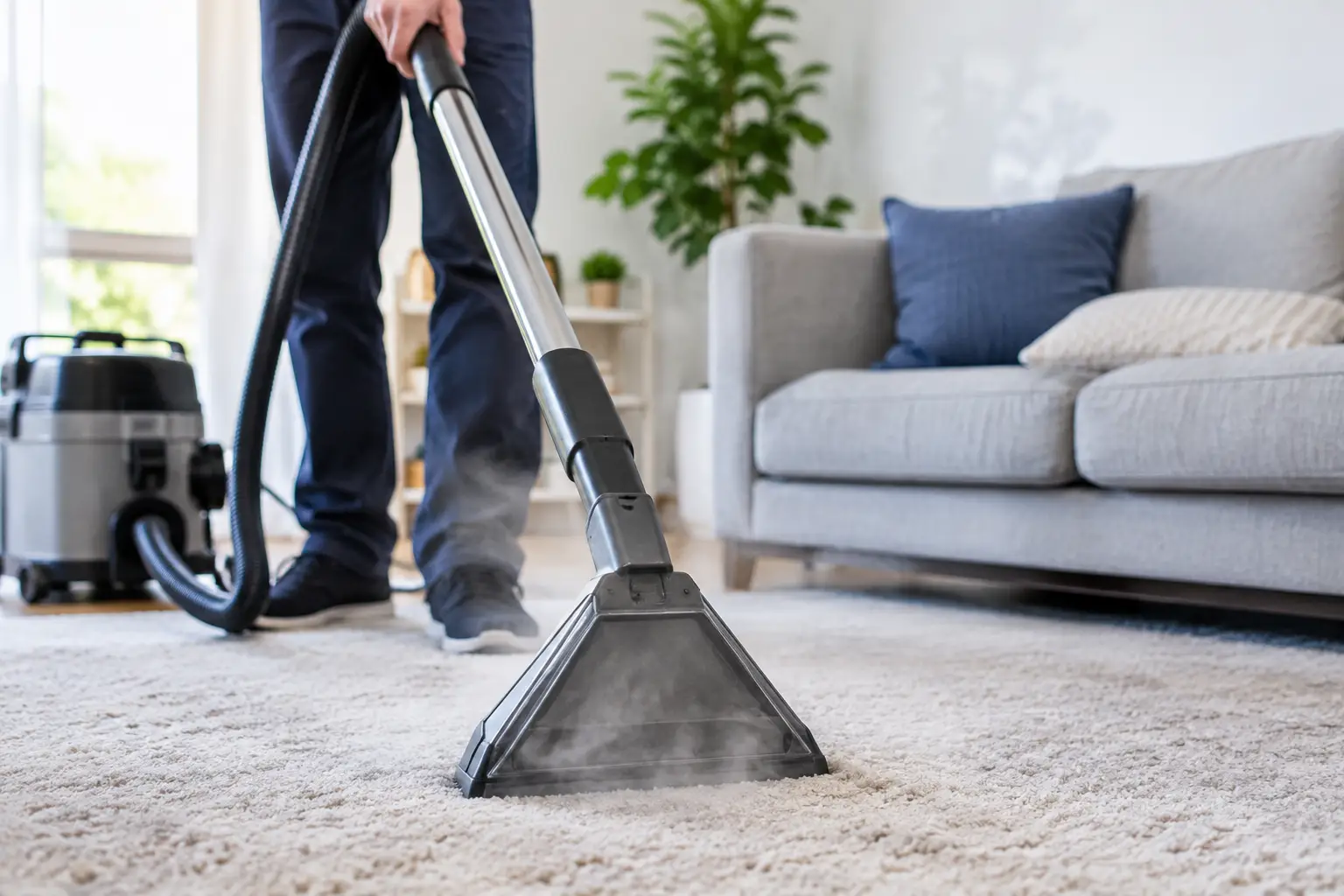
Steam cleaning is most useful where allergens settle below the surface: carpets, rugs, fabric sofas, dining chairs and mattresses. A professional hot-water extraction machine is often referred to as a steam cleaner, although it works by applying hot water and cleaning solution, then extracting the dirty moisture. This process can be particularly effective because it combines heat, agitation and removal.
For carpets and upholstery, the extraction stage matters as much as the heat. It draws out dust, mite debris, hair, soil and loosened dander that ordinary surface cleaning leaves behind. That is why a carpet may look brighter after treatment and also feel fresher for people with mild allergy sensitivities.
Results depend on the fabric, the level of soiling and whether the item has been maintained regularly. A lightly used armchair may respond well to a careful clean. A heavily soiled rental sofa with years of compacted dust, pet hair and old spills may need more than one treatment, and in some cases the fabric condition limits how aggressively it can be cleaned.
For short-let properties, upholstery cleaning can be scheduled around quieter booking periods or alongside a deep clean. This keeps soft furnishings presentable while helping to reduce the build-up that frequent guest turnovers can create.
Temperature and contact time matter
Not every domestic steamer reaches or maintains a temperature that will deal reliably with mites across a large textile area. Steam also cools quickly after leaving the nozzle. Moving too fast, using the wrong attachment or failing to allow enough contact time reduces the benefit.
Professional equipment and trained handling offer more consistent coverage, particularly on larger carpets, mattresses and suites of upholstered furniture. However, even professional cleaning needs to be matched to the care label, fabric type and drying conditions.
What steam cleaning cannot do
Steam cleaning should be viewed as one part of an allergen-control routine, not a substitute for it. It cannot permanently prevent new allergens entering a home, and it will not resolve an untreated moisture issue.
It is also unsuitable for some surfaces. Delicate fabrics, untreated wood, certain laminates, loose flooring edges, damaged upholstery, electronics and painted finishes can be harmed by heat or moisture. Applying too much steam to a mattress or thick carpet can leave it damp internally, which is particularly unhelpful in humid conditions.
In Malta, drying time deserves attention. Warm weather can help, but coastal humidity and limited ventilation may slow drying indoors. Carpets and upholstery should be allowed to dry fully before use. Good airflow, open windows where practical and correctly managed extraction reduce the risk of lingering dampness.
A practical approach for reducing allergens
The most reliable results come from combining cleaning methods rather than relying on one machine. Begin with thorough vacuuming using a well-maintained vacuum, ideally with a HEPA filter. This removes loose dust, hair and particles before moisture is introduced.
Next, use steam or hot-water extraction only on suitable surfaces. The aim is to treat embedded soil and allergen residue without over-wetting the material. Once fully dry, vacuuming again can help remove particles brought closer to the surface during cleaning.
For occupied homes, wash bedding regularly at an appropriate temperature for the fabric, clean curtains and soft furnishings on a planned schedule, and reduce unnecessary clutter where dust collects. For furnished rentals, include high-touch soft furnishings, mattress protectors and fabric headboards in the property’s periodic deep-cleaning plan rather than waiting until odours or visible marks appear.
Hard surfaces need a different approach. A damp microfibre cloth generally captures dust better than dry dusting, which can push particles back into the air. Floors should be vacuumed or damp-mopped, while air-conditioning filters and ventilation points should be checked as part of routine maintenance.
When to book professional steam cleaning
Professional cleaning is worth arranging when carpets have a dull appearance, upholstery holds odours, a property has changed tenants, pets have stayed regularly, or a post-construction clean has left fine dust in fabric surfaces. It is also a sensible reset before a busy holiday-rental period, particularly where guest-ready presentation and fast turnaround are priorities.
Be clear about the issue when requesting a quote. Mention pet use, stains, odours, visible mould, water damage or concerns about a particular fabric. This allows the cleaning method to be assessed properly before work begins. A good service provider will not promise that steam is safe or suitable for every surface.
Cleaning Services JV can coordinate carpet and upholstery cleaning alongside deep cleaning, Airbnb housekeeping and maintenance requests, making it easier to prepare a home or rental property without arranging multiple providers.
Steam cleaning works best when it is used for what it does well: treating heat-safe surfaces, loosening embedded contamination and supporting proper extraction. If allergy control is the goal, plan for removal, drying and regular upkeep as well. A clean-looking room is useful, but a properly maintained one is more comfortable for every guest, tenant and household member.
#cleaning #clean #cleaninghacks #cleanwithme #cleaningmotivation #cleaningtips #cleanhouse #cleaningroutine #cleaningcommunity #deepcleaning #cleanhome #cleaninggadgets #cleaningservice #cleaningservices #commercialcleaning #residentialcleaning #cleaningcompany #cleaningbusiness #officecleaning #professionalcleaners #cleaners #housecleaning #cleaningservicejv #beforeandafter #cleaningasmr #satisfying #satisfyingcleans #transformation #deepclean #cleaningtransformation #dirtytoclean #carpetcleaning #upholsterycleaning #stainremoval #steamcleaning #ecocleaning #greencleaning #naturalcleaning #nontoxiccleaning