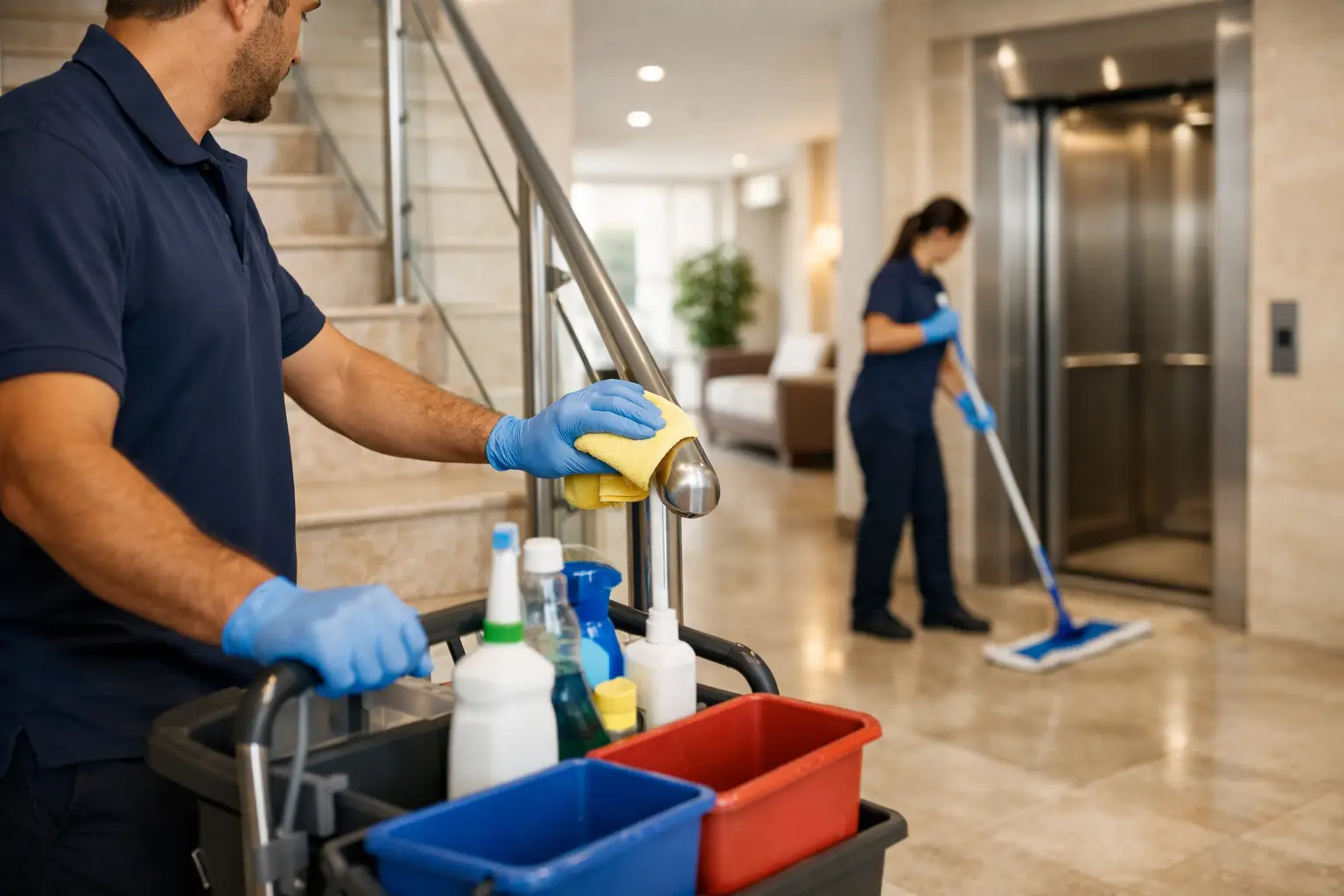
A marked entrance, dusty handrails or an overflowing bin area can change how residents, guests and prospective tenants view an entire building. Communal area cleaning Malta is not simply a routine tidy-up. It is a practical part of property presentation, resident comfort and day-to-day building management.
For landlords, block managers and short-let operators, shared spaces often create the most visible maintenance issue because responsibility is spread across several occupants. A clear cleaning plan gives the building a consistent standard without relying on residents to fill the gap.
What communal area cleaning should cover
Communal areas are the spaces everyone uses but nobody owns individually. In a typical Maltese block, this may include the main entrance, lobby, staircases, lifts, corridors, landings, letterbox areas, bin rooms and internal glass. Larger developments may also need attention for shared garages, roof access points, courtyards and outdoor walkways.
The right scope depends on the building. A quiet four-flat block does not need the same frequency or level of reporting as a busy development with holiday lets, a lift and several common entrances. The key is to define what is included before cleaning begins, rather than leaving standards open to interpretation.
A regular visit commonly involves sweeping and mopping floors, removing dust from ledges and skirting, wiping entrance doors and handrails, cleaning lift touchpoints, managing light cobwebs and removing visible marks from walls or glass. Bin areas need particular attention, as spills, odours and loose waste can quickly affect the rest of the property.
Periodic work should also be planned separately. This may include deeper floor cleaning, high-level dust removal, window cleaning, pressure washing of entrances or a more intensive clean after painting and repair work. Treating these tasks as part of the normal weekly visit can lead to rushed results or unclear pricing.
Why consistent cleaning matters to property management
Shared spaces receive more foot traffic than most private homes. Sand, dust, wet footwear and rubbish move through the entrance every day. In properties used for short lets, luggage wheels, frequent arrivals and guest turnover can add to the wear on floors, walls and doors.
A dependable cleaning schedule helps prevent small issues from becoming expensive ones. Grit left on tiled floors can dull the surface over time. Spills around bins can attract pests. Dusty light fittings, stained walls and neglected corners make a building feel poorly managed, even if individual flats are well maintained.
There is also a practical resident benefit. Clean stairs, clear walkways and dry entrance floors reduce avoidable slips and make the building more comfortable to use. Cleaning cannot replace maintenance, but a professional team can identify visible concerns such as a leaking pipe, broken light, damaged handrail or loose tile while working on site. Reporting these issues early allows the responsible party to arrange a repair before it disrupts residents or guests.
Setting the right cleaning frequency
There is no single schedule that suits every block. Frequency should reflect footfall, the number of units, the type of occupants, the condition of the building and whether there are shared bins or outdoor areas.
A small residential block may work well with a weekly clean and a planned deeper service every few months. A larger development, building with short-let accommodation or property near a busy road may need cleaning two or more times per week. During winter, entrances can need more frequent attention after rain. In summer, dust and higher guest turnover can create a different set of demands.
It is better to begin with a realistic schedule and review it after a few weeks. If the entrance is consistently clean until the next visit, the plan is working. If bins overflow between visits or floors look marked after a day or two, the frequency or task list needs adjusting.
Agree standards, not just visit days
“Weekly cleaning” is too vague on its own. A useful service arrangement identifies the areas to be cleaned, the tasks expected, the planned frequency and any exclusions. It should also confirm whether consumables, waste removal, key access and emergency call-outs are included.
This avoids common disputes. For example, wiping the communal staircase and removing bulky items from a bin room are different jobs. Cleaning a lift interior is not the same as arranging a technical repair when the lift stops working. Clear boundaries make quote management easier and help everyone understand what action is required.
For managed properties, a simple reporting process is equally valuable. Photographs of recurring issues, notes about access problems and confirmation that scheduled work has been completed can reduce unnecessary messages between owners, tenants and contractors.
Common problem areas in shared buildings
Entrances make the first impression, but they are not always the hardest area to keep clean. Staircase corners gather dust, while handrails and lift buttons collect fingerprints quickly. Internal glass can look marked within hours, especially in buildings with children, pets or regular visitors.
Bin rooms and external waste points require a more practical approach. The cleaner can remove loose debris, sanitise suitable surfaces and report overflow or damage. However, a cleaning visit will not solve repeated waste disposal problems if residents leave unsuitable items or bins are not collected as expected. In those cases, the building manager may need to communicate rules, arrange bulky-waste collection or review bin capacity.
Outdoor entrances can also need different treatment from indoor communal spaces. Pressure washing may improve stained paving, but it is not suitable for every surface or every situation. Water drainage, nearby entrances, surface condition and pedestrian access need to be considered first. A scheduled service at a quiet time is often more effective than trying to resolve years of staining in a single visit.
When cleaning and maintenance need to work together
Communal area presentation is rarely only a cleaning issue. Peeling paint, cracked tiles, damaged plaster, failed lighting and worn door hardware all affect how clean the building looks. Repeatedly cleaning around a fault is not an efficient long-term solution.
This is where one property-services partner can reduce administration. A cleaning team can maintain the agreed standard while painting, minor repairs, post-construction cleaning, upholstery care or other maintenance requirements are coordinated through a clear booking or quotation process. For property managers handling several buildings, this reduces the time spent finding separate providers for connected tasks.
That does not mean every job should be bundled automatically. A straightforward weekly staircase clean should remain straightforward. But when a communal refresh involves dust after repairs, stained carpets, exterior marks and repainting, coordinated scheduling can prevent one contractor from undoing another’s work.
Choosing a provider for communal area cleaning Malta
The lowest quote is not always the lowest operating cost. A missed visit, poor key management or vague service scope can create extra work for the person managing the building. Look for a provider that can confirm the task list, arrange access reliably, respond to property-specific requirements and provide a clear route for quotes and bookings.
Ask how changes are handled. Buildings change over time: a new tenant moves in, a short-let unit begins operating, renovation work creates additional dust or bin arrangements are altered. A practical cleaning service should be able to adjust the schedule and scope without turning a simple request into a long administrative process.
Cleaning Services JV supports property owners and managers with booked cleaning, specialised property care and maintenance coordination. For a communal space, the most useful starting point is a clear description of the building, access arrangements, areas to be covered and the standard required. From there, a routine can be set that fits the property rather than a generic checklist.
A well-kept communal area gives residents a cleaner place to come home to and guests a better first impression before they reach the front door. Set the standard clearly, review it when the building’s use changes, and arrange support before minor presentation issues become a constant management task.
#cleaning #cleaningservice #cleaningservices #commercialcleaning #residentialcleaning #cleaningcompany #professionalcleaners #cleaners #deepcleaning #cleaningroutine #cleanhome #propertymaintenance #windowcleaning #pressurewashing #ecocleaning #cleaningservicejv